
Melissa officinalis L. - Lemon Balm
- Dec 17, 2024
- 17 min read
Updated: Jun 16, 2025
Botanical Name and Authorship
Melissa officinalis L. [2]
Plant Family: Lamiaceae [3]
Botanical Synonyms
Faucibarba officinalis L. [2]
Thymus melissa [2]
Common Names
Melissa, Bee balm, Balm, Sweet balm, Honey plant, English balm, Balm leaf, Balm oil plant,
Barm leaf, Dropsywort, Primentary, Sweet Mary, Tea balm, Balm mint, Blue balm, Garden
Balm, Heart’s delight, Toronjil (Spanish), Limonera (Spanish), Xiang feng hua (Chinese) [4, 5,
6, 7].
The origin of the word “Melissa” comes from the Greek word “melisso,” meaning “honey bee,”
“bee,” or “honey” [3,8].
Plant Description
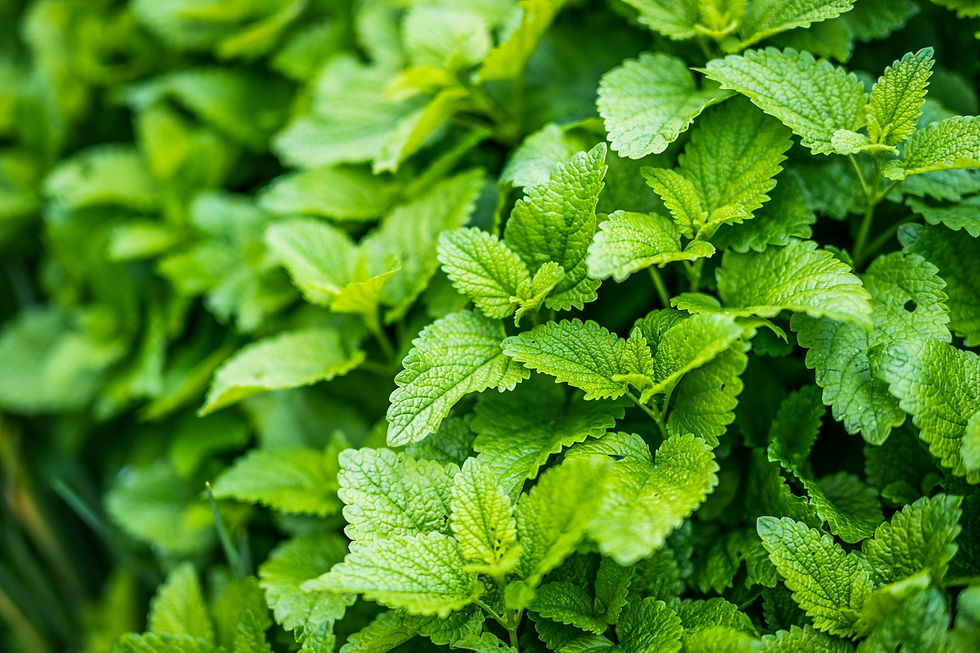
Growing from many lateral roots, this bushy and upright perennial can reach a height of up to 3
ft (1 m) [7,9]. The stem is square [7]. Leaves are opposite, heart to oval, slightly hairy, 2 to 8 cm
long, and the margins are toothed [7,9]. The leaf surface has prominent coarse and brined veins.
[9] New leaves appear much different, having a vibrant green colour and are oval [7]. Flowers
are petite, bilabiate coronas that grow in small clusters of 4 to 12 blossoms [7,9]. The colour is
white, but it can sometimes be pale pink to yellow—blooms from May to August [7,9,11]. The
whole plant is highly fragrant, smelling similar to lemon [7].

Habitat, Distribution, and Ecology
Naturalizing in various parts of Europe and North America, lemon balm was once native to
Southern France, the Mediterranean region, North Africa, and Western Asia [11,12,13]. It is generally found in sunny, well-drained habitats, fields, gardens, and roadways [11,12]. However, lemon balm does occur in poor soil and can tolerate droughts, growing well in small spaces and
containers [12].
As Lemon balm produces a lot of nectar, it attracts various butterflies, bees and other pollinators
and is resistant to deer [8,12,13].
Parts used
Leaves, aerial parts [7]
Sustainability and Cultivation
Lemon balm is currently not listed on the “at-risk” or “species-to-watch” list by the United Plant
Savers [14]. While it may not be listed, lemon balm is susceptible to powered dry mildew, root
rots, aphids, leaf spot, leaf blight, grey mould, and mites [12,45].
Melissa officinalis can be used interchangeably with Melissa officinalis ssp. altissima, otherwise
known as Melissa officinalis 'Lime Balm' [15]. While some believe this species has a lime-like
fragrance, the chemical constituents are the same as Melissa officinalis [15].
Lemon balm grows in zones 3a-7b, and can grow in various habitats [12]. Best sown indoors
from March to May, Melissa officinalis can be easily propagated via seeds, roots, and twigs [16,
45]. Although easy to grow, seed propagation can take up to three weeks [16,45]. At this time,
they can be transplanted from April to June [16,45]. Although Lemon balm prefers well-drained
soils it will tolerate poor soils and droughts [11,12]. Additionally, it does well in full sun or
partial shade, preferring partial shade [11,12,17]. If grown in full sun, lemon balm grows into a
compact and bushy perennial, but if grown in partial shade, it will become a sprawling plant
[17]. Harvesting usually occurs between July and September and can be harvested throughout the
growing season [16, 35, 45]. As this plant has volatile oils, lemon balm is best harvested in the
afternoon when they are the strongest [45].
Harvesting, Collection and Preparation
Lemon balm can be harvested by cutting the stem 6-8 inches (approx 20 cm) above the ground,
thus ensuring regrowth [7]. As mentioned above, lemon balm can be harvested throughout the
season, ideally two to three times [7,18]. The leaves should be harvested before blooming to
ensure the highest concentration of volatile oils and to avoid the yellowing of the leaves [7,18].
If not handled carefully, lemon balm’s active compounds, volatile oils, can easily be lost [7].
Frequent touching can also cause leaf discolouration and dried brown leaves [7,18]. After
harvesting, it is strongly recommended to process the herb immediately [7,18]. The fresh leaves
can be turned into fresh tinctures, teas or placed on drying racks away from direct light [7].
Fresh leaves can also be dried at a low temperature of around 86°F (30°C) [7]. When stored
properly, fresh leaves will last approximately 7-14 days after harvesting, and dried leaves will
last approximately one year or longer [18].
Preparations: tincture (1:5, 30%), infusion, glyercite, salves, infused oils, cream, essential oil,
capsules [6,7,8].
Constituents
Over 100 chemical constituents have been identified in Lemon balm; the following are the main
chemicals found [15]:
Flavonoids (0.5%) - luteolin-7-O-glucoside, isoquercitrin, quercetin, apigenin, apigenin-7-O-
lucoside, kaempferol, and rhamnocitrin [7,17]
Volatile oils (0.06-0.375%) - monoterpenes including: citronellal, citral, geranial, neral, beta-
ocimene, geraniol, linalool; sesquiterpenes including: beta-caryophyllene, germacrene D, geranyl
acetate [7,13,17,19]
Polyphenols - rosmarinic acid, chlorogenic acid, caffeic acids, protocatechuic acid,
hydroxycinnamic acid derivatives, metrilic acid, ferulic acid, tannins, methyl carnosoate,
hydroxcinnamic acid, 2(3’,4’-dihydroxyphenyl_-1,3-benzodioxole-5-aldehyde [7,13,17,19]
Triterpenes - ursolic acid, oleanolic acid [19]
Ursene triterpene glycosides - melissiosides A-C [7]
Vitamins - Vitamin C and carotenoids [7]
Lemon balm's flavour and scent come from citral, citronellal, geraniol and linalool [13]. The
flavonoids, phenolic acids, terpenes, rosmarinus acid and caffeic acids may contribute to its
antioxidant effects [13]. Tannins help with its antiviral effects [13].
Pharmacology and Research Studies
Anxiety
A standardized extract of Melissa officinalis and Valeriana officinalis was analyzed for its
anxiolytic properties. In a carefully controlled double-blind study, 24 participants received three
extracts in the following doses: 600 mg, 1200 mg, and 1800 mg, each containing Melissa
officinalis, Valeriana officinalis, and a placebo. Each dosage was given on a separate day, and
there was a gap of seven days between each dose to allow enough time for any effects to wear
off. At the end of the study, it was found that the 600 mg dose of Melissa officinalis and
Valeriana officinalis improved anxiety, while the highest dose of 1800 mg increased anxiety.
Due to these results, further investigation is warranted for the combined anxiolytic properties of
Melissa officinalis and Valeriana officinalis [27].
Anxiety and Insomnia
Having properties that reduce stress and anxiety, a standardized extract of Melissa officinalis L
was produced called Cyracos®. When given this extract, mice experienced moderate stress
reduction. Due to these results, another study was conducted over 15 days, including “volunteers
with mild-to-moderate anxiety disorders and sleep disturbances.” [21] The results showed that
Cyracos® “effectively reduced anxiety by 18%, improved anxiety-related symptoms by 15%,
and decreased insomnia by 42%. Overall, 95% of the participants responded positively to the
treatment, with 70% achieving complete remission from their anxiety, 85% for insomnia and
70% for both.” [21] Although this study is one of the first to demonstrate the stress-relieving
effects of Melissa officinalis L., further studies are needed to investigate physiological stress
markers. [21]
Depression
An eight-week clinical trial compared Melissa officinalis L and Lavandula angustifolia with
fluoxetine to determine their effectiveness in treating mild to moderate depression. Forty-five
adult outpatients. After completing the Diagnostic and Statistical Manual of Mental Disorders,
45 outpatients were randomly assigned to one of three groups. Each group was randomly
assigned daily doses of either Melissa officinalis (2g), Lavandula angustifolia (2g) or fluoxetine
(20 mg). Using the Hamilton Rating Scale for Depression, each participant was evaluated at
weeks 0, 2, 4 and 8. The findings show that Melissa officinalis and Lavandula angustifolia have
similar therapeutic effects to fluoxetine in treating mild to moderate depression [26].
Thyroid
In vitro studies on rats have shown that Melissa officinalis can block the binding of thyroid-
stimulating hormone (TSH) to its receptors [22]. This effect is thought to occur at both the
hormone and receptor sites [22]. A combined herbal preparation of bugleweed (Lycopus spp.)
and Lemon balm (Melissa officinalis) was tested in two case studies [20]. The first case study
consisted of a 64-year-old female presenting with Graves’ disease, and the second case study
featured a 46-year-old female presenting with hyperthyroidism and periorbital edema. The
results showed positive effects after taking the combined extract over several months [20]. In
both cases, the patients thyroid-stimulating immunoglobulin (TSI) levels normalized over a few
months [20].
Oxidative Stress in Radiology
Drunk as an infusion, 55 radiology personnel were asked to consume lemon balm (1.5g/100
mL) twice daily for 30 days. The levels of “plasma, lipid peroxidation, DNA damage, catalase,
superoxide dismutase, myeloperoxidase, and glutathione peroxidase activity were measured
before and after” consumption [23]. Using lemon balm showed a marked “improvement in
plasma levels of catalase, superoxide dissimulates, and glutathione peroxidase and a marked
reduction in plasma DNA damage, myeloperoxidase, and lipid peroxidation.” [23] The results showed that consumption of lemon balm infusion can significantly improve oxidative stress and
reduce DNA damage [23].
Nervous Dyskoimesis
A study on children under 12 years of age experiencing restlessness and dyssomnia examined the
effectiveness and tolerance of a combined valerian and lemon balm preparation (Euvegal®). A
total of 918 children were evaluated; after taking Euvegal® over four weeks, “80.9% of patients
suffering from dyssomnia experienced improvements, while 70.4% of patients with restlessness
improved significantly. On average, other listed symptoms showed a total improvement of
37.8%” [24]. Based on these figures, Euvegal® forte was effective in treating young children
with restlessness and dyssomnia and was well tolerated [24].
Herpes
Melissa officinalis L has been found to effectively treat Herpes simplex virus type 2 (HSV-2)
lesions. Researchers tested a hydroalcoholic extract of Melissa officinalis L. on Vero cells for its
antiviral properties. The results showed that the extract was non-toxic at concentrations between
0.025 - 1 mg mL(-1). They also found that at a concentration of 0.5 mg mL(-1), the extract
reduced the cytoplasmic effect of HSV-2 on Vero cells by up to 60%. The extract did not prevent
the virus from entering the cells, suggesting it works after it has entered the cell. Using NMR and
HPLC, the extract was analyzed and contained cinnamic acid-like compounds, with rosmarinic
acid as the principal constituent (4.1% w/w). This study’s findings support using Lemon balm for
treating HSV-2 lesions and warrants further clinical investigation [25].
Dementia
A study was conducted to determine the effectiveness of aromatherapy on patients with severe
dementia using the essential oil of Melissa officinalis L. An aromatherapy treatment for seventy-
two patients were randomly assigned with either the Melissa officinalis L. or a placebo. Applied
twice a day in a base lotion to the face and arms twice a day, those who received the essential oil, 60% experienced a 30% reduction in the Cohen-Mansfield Agitation Inventory (CMAI) score. In
comparison, only 14% of the placebo group experienced the same reduction. The patients who
received the Melissa officinalis L. essential oil showed an improvement in agitation with a mean
reduction in CMAI score of 35% compared to 11% in those who revised the placebo.
Additionally, those who received essential oil significantly improved their quality of life. These
results showed that the Melissa officinalis L. essential oil is safe and effective for treating
agitation in severe dementia patients [28].
Toxicity
Although Lemon balm is generally well-tolerated and considered safe for up to eight weeks,
there have been reports of adverse effects with both oral and topical use [29,30]. According to
the present findings, consuming 600 mg/day of lemon balm extract is safe [30]. Further research is needed on toxicity and dose escalation; therefore, it is recommended to exercise caution when
using high doses of lemon balm and for prolonged periods [29].
Herbal actions
|
|
Energetics
Western perspective: Sour, cool. Indicated for excited tissues. Associated with the heart and
stomach [46]
Western/TCM perspective: Sour, spicy, cool. Entering the lung and liver meridians [32,33]
Ayurvedic perspective: Pungent, sweet, sour, astringent. Decreases Pitta and Kapha, stabilizes
Vata. Enters the digestive, nervous, reproductive, and respiratory channels [34].
Therapeutic Use and Specific Indications
Cardiovascular
According to Mathew Wood “Although it will generally sedate most people, it is particularly
suited to conditions of sympathetic excess, hyper adrenaline, or hyperthyroidism. It is especially
indicated when these tendencies are associated with the stomach or heart. Heart palpitations,
atrial fibrillation, high blood pressure, and even aneurism have found a treatment in Melissa.”
[46]
Digestive System and Nervous System
Well known as a carminative herb, lemon balm helps treat flatulent dyspepsia and helps reduce
digestional spasms [31]. Due to its antidepressant qualities, this herb is indicated when
dyspepsia is accompanied by anxiety or depression [31]. As there is a connection between the
digestive and neurological systems (gut-brain axis), the volatile oil acts upon these parts [31]. As
such, some herbalists have compared lemon balm to oats and classified it as a trophorestorative.
[31]
Lemon balm has also been used to treat insomnia, neuralgia, and tension-induced migraines [31].
Immune system
Lemon balms' diaphoretic properties have been used to treat fevers caused by tension in small
children and to recover from nervous depression after a severe fever, especially if the digestive
system has been stimulated for an extended period [46].
The diaphoretic and febrifuge effects from lemon balm provide a cooling sensation for those
suffering from catarrh, fever, cold, or influenza [3,35].
Integumentary System
Lemon balm was once used with salt to remove pilar cysts, ease gout pain, and cleanse wounds
[35]. The hot infusion would extract rosmarinic acid and other polyphenols, giving lemon balm
its antiviral properties, which assists with HSV-2 lesions [31].
Metabolism
Extensive laboratory research has been conducted on the hormone-regulating properties of
Lemon balm [31]. These indicate that freeze-dried extracts can effectively prevent the thyroid-
stimulating effects of hormones on the thyroid gland [31]. In individuals with hyperthyroidism
caused by Grave’s disease, it can impair the binding of TSH to cell membranes, inviting
iodothyronine deiodinase, and interferes with immunoglobulin receptor binding [31].
Lemon balm-specific indications
|
|
Contraindications and Cautions
Not recommended during pregnancy or in large doses if you have hypothyroidism and
Hashimoto's thyroiditis [4,7]. Please consult a healthcare practitioner if you are taking any
thyroid medications [4,7].
May cause drowsiness [37]. “Exercise caution if operating heavy machinery, driving a motor
vehicle or involved in activities requiring mental altertness.” [37]
Pharmacy and Dosage
Tincture: 3-5 mL taken 3-4 times per day (1:5, 30%) [7]; for adults and adolescents (13 and
over) take 48-96 drops 1-3 times daily “in a little water on an empty stomach” [37]
Tea (hot infusion): 1.5-4.5g of dried lemon balm per cup taken 4 times per day [6]; 1-2 tsp
dried lemon balm per cup taken 2-4 times per day [7]
Cold infusion: Combine 0.5 oz dried lemon balm in 4 cups of water and drink 1/2-1 cup 1-4
times per day [7].
Glycerite: Add 10-60 drops to water, and consume 1-4 times per day [40]
Topical (salves, infused oils, cream): Apply to the affected area, 3 times daily or as needed [6]
Essential Oil: If applying topically, dilute in a carrier oil before use and apply as needed. If
using in a diffuser please see your manual for reference on how many drops to add.
Capsules: For adults and adolescents (13 and over) take 1 250 mg (capsule of dried Lemon
balm) 2-3 times per day on an empty stomach [37].
Synergism and Incompatibilities
Hyperactive thyroid: Combine Lemon balm, bugleweed and motherwort [8]
Pre-menstrual syndrome: “steep lemon balm, basil, chamomile, catnip and raspberry for 10
minutes and drink” [41]
Cold and flu: “steep lemon balm, cinnamon, and basil mint for 10 minutes and drink” [41]
Sunburns: “combine lemon balm, basil, cucumber, aloe vera and vinegar, place all herbs in a tub
and soak” [41]
Facial inclusion: “Combine lemon balm, rosemary, thyme, aloe vera, 1/2 cucumber, mint,
chamomile and steep for 30 minutes; apply to the face for 10 minutes” [41]
Anxiety: Lemon balm and valerian [27]
Depression: Lemon balm and lavender [26]
Ethnobotany and Folkloric Usage
According to Greek mythology, honey was discovered by a nymph named Melissa. Believing
nymphs could take on the form of bees, they provided honey to baby Zeus, helping him gain the
power to become ruler of the gods [42].
Having a rich history, lemon balm was used by the ancient Greeks and Romans who applied
crushed leaves to wounds, preventing them from bleeding and incorporated the herb into wine to
combat fever [42]. According to Gerard “The juice of Balm glueth together greene wounds, and
gives the opinion of Pliny and Dioscorides that Balm, being leaves steeped in wine, and the wine
drunk, and the leaves applied externally, were considered to be a certain cure for the bites of
venomous beasts and the stings of scorpions” [35].
To improve his health and extend his lifespan, Charlemagne (Charles the Great, born during the
ninth century) consumed both Lemon balm teas and tinctures [42,47]. Due to its benefits, he
mandated the cultivation of lemon balm in all the apothecary and monastery gardens throughout
this kingdom [42].
Dating back to the Merovingian era, bees have been associated with immortality and industry
and have long been a symbol of French royalty, seen in the flour-de-lies [42]. Farmers likely relied on lemon balm’s ability to attract bees, allowing them to meet demands, prompting the appointment of gamekeepers to preserve wild hives [42]. Melissa water (Eau de Melisse), was extensively advertised as a nerve tonic and calming agent during this time [42].
During the 16th century, lemon balm gained popularity as a key ingredient in Carmelite water,
an alcoholic concoction created by French Carmelite nuns [42]. Highly praised for its ability to
alleviate headaches, neuralgia, and used as a general health tonic and perfume, Emperor Charles
V of Spain consumed it daily, giving it the name of King Charles water [42,44]. To make
Carmelite water “two pounds of fresh lemon balm leaves were steeped in half a gallon of orange
blossom water and a gallon of alcoholic spirits for two weeks.” [44]
According to Culpeper, lemon balm is associated with Jupiter and Cancer and is known to
enhance the function of nature in various ways [43]. Seraphio claims that lemon balm has the
ability to boost the mind and emotional spirit, alleviate fainting and swooning, especially in those
who are sleeping [43]. It aids in ridding the mind of distressing thoughts brought on by negative
emotions, improves cognitive function by removing any obstructions from the brain, and aids
digestion [43].
Dioscorides advised women seeking to induce their menstrual cycle to bathe or sit in a
lemon balm decoction [43]. When combined with nitre, lemon balm helped alleviate toothaches
and bloody flux [43]. It was also utilized to help women in labor expel the after-birth [43]. It was
also useful for boils, when mashed and boiled in wine and oil and applied to it, the Lemon balm
mash would assist in ripening and rupturing the boil [43].
Lemon balm was a highly recommended herb during the Middle Ages and Renaissance eras for
treating a variety of health concerns such as “insomnia, toothaches, menstrual issues, digestive
upsets, headaches, poor appetite, fever, and anxiety” [42]. Due to its delightful scent, lemon
balm was popular in churches and was often spread onto floors until the nineteenth century [42].
Lemon balm, was commonly used to treat wounds and ulcers by the Muslim physician and
philosopher Bina Sina (Avicenna) [44]. The healing powers of Lemon balm were highly
regarded by sixteenth-century physician Paracelsus as he believed it could be used for “all
complaints supposed to proceed from a disordered state of the nervous system” [44]. He
also believed that it could bring back patients from the brink of death [44].
Utilized by the Cherokee Indians in America, lemon balm was used for “colds, typhus, fevers
and chills” [44]. Meanwhile, the Costanoan Indians of Northern California “used it as a
gastrointestinal aid.” [43]
Popular with Thomas Jefferson, lemon balm was grown in his garden at Monticello and in many
colonial gardens it was a substitute for lemons [44].
Lemon balm continues to grow in popularity, today it is commonly used in food [44]. With
clinical trials showing its benefits in Alzheimer’s or dementia patients, as well as its medicinal
benefits known in Europe, Lemon balm is gaining acceptance in the United States. In Germany,
Lemon balm preparations have been recognized by the government and are prescribed for “those
who have nervous conditions and spasms of the digestive tract.” [44]
References
1. Victor Serbian. Photography [Internet]. Unsplash. [cited 2023 Sept 12]. Available from:
https://unsplash.com/photos/whTrv7kvGJY
2. Melissa officinalis L. [Internet]. Plants of the World Online. [cited 2023 Sept 12].
Available from: https://powo.science.kew.org/taxon/urn:lsid:ipni.org:names:450084-1
3. Lemon Balm [Internet]. American Botanical Council. [cited 2023 Sept. 12]. Available
from: https://www.herbalgram.org/resources/herbalgram/issues/115/table-of-contents/hg115-herbprofile/
4. Lemon Balm (Melissa officinalis) [Internet]. Herb Rally Schoolhouse [cited 2023 Sept
12]. Available from:https://www.herbrally.com/monographs/lemon-balm
5. Mellisa officinalis [Internet]. Royal Horticultural Society. [cited 2023 Sept 12]. Available
from: https://www.rhs.org.uk/plants/11040/melissa-officinalis/details
6. Lemon Balm [Internet]. Mount Sinai. [cited 2023 Sept 12]. Available from:
https://www.mountsinai.org/health-library/herb/lemon-balm
7. Lemon Balm [Internet]. Herbal Academy. [cited 2023 Sept 12]. Available from:
https://herbarium.theherbalacademy.com/monograph/lemon-balm/
8. The Lemon Balm Plant. [Internet]. Herbs with Rosalee. [cited 2023 Sept 12]. Available
from: https://www.herbalremediesadvice.org/lemon-balm-plant.html
9. The Essential oil of Lemon Balm (Melissa officinalis L.) [Internet]. Internet Archive [cited 2023 Sept 13]. Available from:
10. Ivabalk Lemon Balm [Internet]. Free photo on Pixabay. [cited 2023 Sept 12]. Available
from: https://pixabay.com/photos/lemon-balm-medicinal-herb-medical-5218673/
11. Melissa (U.S.P) [Internet] Kings American dispensatory. [cited 2023 Sept 19]. Available
from: https://archive.org/details/kingsamericandis02kinguoft/page/1252/mode/2up?q=Melissa+
12. Melissa officinalis [Internet] North Carolina Extension Gardener Plant Tool box. [cited 2023 Sept 19]. Available from: https://plants.ces.ncsu.edu/plants/melissa-officinalis/
13. Botanitcal, Geographical, Herbicidal Aspects of Lemon Balm [Internet] [cited 2023 Sept 19]. Available from: https://www.actascientific.com/ASAG/pdf/ASAG-04-0836.pdf
14. Savers UP. Species At-Risk List [Internet]. United Plant Savers. [cited 2023 Sept 19].
Available from: https://unitedplantsavers.org/species-at-risk-list/
15. Lemon Balm: An Herb Society of America Guide [Internet]. The Herb Society of America [cited 2023 Sept 20]. Available from: lemon balm https://www.herbsociety.org/file_download/inline/d7d790e9-c19e-4a40-93b0-8f4b45a644f1
16. How to grow lemon balm / RHS Growing Guides [Internet]. Royal Horticultural Society
[cited 2023 Sept 19]. Available from: https://www.rhs.org.uk/herbs/lemon-balm/grow-your-own
17. Hazard. S. Lemon Balm (Melissa officinalis) [Internet]. Herbrally. [cited 2023 Sept 19].
Available from: https://www.herbrally.com/monographs/lemon-balm
18. Lemon Balm [Internet]. Ontario Ministry of Agriculture Food and Rural affairs. A
Resource of Speciality Crop Growers. [cited 2023 Sept 20] Available from: https://
www.omafra.gov.on.ca/CropOp/en/herbs/culinary/lemba.html
19. Petrisor G, Motelica L, Craciun LN, Oprea OC, Ficai D, Ficai A. melissa officinalis:
Composition, pharmacological effects and derived release systems-A Review [Internet]. U.S.
National Library of Medicine; 2022 [cited 2023 Sept 20]. Available from: https://
www.ncbi.nlm.nih.gov/pmc/articles/PMC8998931/
20. Kaplan D, Dosiou C. Two cases of graves’ hyperthyroidism treated with homeopathic
remedies containing herbal extracts from lycopus spp. and melissa officinalis [Internet]. Oxford University Press; 2021 [cited 2023 Sept 26]. Available from: https://www.ncbi.nlm.nih.gov/pmc/articles/PMC8090196/
21. Cases J, Ibarra A, Feuillère N, Roller M, Sukkar SG. Pilot trial of Melissa officinalis L.
Leaf extract in the treatment of volunteers suffering from mild-to-moderate anxiety disorders and sleep disturbances [Internet]. IOS Press; 2011 [cited 2023 Sept 20]. Available from: https://content.iospress.com/articles/mediterranean-journal-of-nutrition-and-metabolism/mnm4-3-09
22. Santini F, Vitti P, Ceccarini G, Mammoli C, Rosellini V, Pelosini C, et al. In vitro assay of
thyroid disruptors affecting TSH-stimulated adenylate cyclase activity - journal of
endocrinological investigation [Internet]. Springer International Publishing; 2014 [cited 2023
Sept 20]. Available from: https://link.springer.com/article/10.1007/BF03348190
23. Zeraatpishe A, Oryan S, Bagheri MH, Pilevarian AA;Malekirad AA, Baeeri M, Abdollahi M; Effects of Melissa officinalis L. on oxidative status and DNA damage in subjects exposed to long-term low-dose ionizing radiation [Internet]. U.S. National Library of Medicine; [cited 2023 Sept 20]. Available from: https://pubmed.ncbi.nlm.nih.gov/20858648/
24. Müller SF, Klement S; A combination of valerian and lemon balm is effective in the
treatment of restlessness and dyssomnia in children [Internet]. Phytomedicine 2006 [cited 2023 Sept 20]. Available from: https://www.sciencedirect.com/science/article/abs/pii/S0944711306000250
25. Mazzanti G, Battinelli L, Pompeo C, Serrilli AM, Rossi R, Sauzullo I, Mengoni F, Vullo
V; Inhibitory activity of Melissa officinalis L. extract on herpes simplex virus type 2 replication
[Internet]. U.S. National Library of Medicine; [cited 2023 Sept 20]. Available from: https://pubmed.ncbi.nlm.nih.gov/19023806/
26. Araj-Khodaei M, Noorbala AA, Yarani R, Emadi F, Emaratkar E, Faghihzadeh S, Parsian Z, Alijaniha F, Kamalinejad M, Naseri M; A double-blind, randomized pilot study for
comparison of Melissa officinalis L. and Lavandula angustifolia mill. with fluoxetine for the
treatment of depression [Internet]. U.S. National Library of Medicine; [cited 2023 Sept 20].
Available from: https://pubmed.ncbi.nlm.nih.gov/32620104/
27. Kennedy DO, Little W, Haskell CF, Scholey AB; Anxiolytic effects of a combination of
Melissa officinalis and Valeriana officinalis during laboratory induced stress [Internet]. U.S.
National Library of Medicine; [cited 2023 Sept 20]. Available from: https://pubmed.ncbi.nlm.nih.gov/16444660/
28. Ballard CG, O’Brien JT, Reichelt K, Perry EK. Aromatherapy as a safe and effective
treatment for the management of agitation in severe dementia: The results of a double-blind,
placebo-controlled trial with Melissa [Internet]. U.S. National Library of Medicine; [cited 2023 Sept 20]. Available from: https://pubmed.ncbi.nlm.nih.gov/12143909/
29. Garner-Wizard M. Re: Review of the Uses, Chemistry, and Pharmacology of Lemon
Balm [Internet]. American Botanical Council 2017 [cited 2023 Sept 21]. Available from: https://
www.herbalgram.org/resources/herbclip/issues/2017/bin_561/071645-561/
30. Lemon Balm (Melissa officinalis L) [Internet]. Restorative Medicine [cited 2023 Sept
21]. Available from: https://restorativemedicine.org/library/monographs/lemon-balm/
31. Hoffmann D. Melissa officinalis . In: Medical herbalism: The science and practice of
Herbal Medicine. Rochester, VT: Healing Arts Press; 2017. p. 567.
32. Tierra M. The Way of Herbs. Simon and Schuster; 1990 pg 181
33. Tierra, M., Planetary Herbology, Lotus Press, Stanta Fe, NM, 1988, pg 157
34. Lemon balm. [Internet]. Herbal Reality [cited 2023 Sept 22]. Available from:
https://www.herbalreality.com/herb/lemon-balm/
35. A Modern Herbal [Internet]. Balm. [cited 2023 Sept 22]. Available from: https://
www.botanical.com/botanical/mgmh/b/balm--02.html
36. Sue, Candace. Lemon balm: Herb of good cheer [Internet]. The Practical Herbalist 2008 [cited 2023 Sept 22]. Available from: https://thepracticalherbalist.com/advanced-herbalism/herbal-encyclopedia/lemon-balm-herb-of-good-cheer/
37. Lemon Balm Capsules [Internet] St. Francis Herb Farm [cited 2023 Sept 22] Available
form: https://stfrancisherbfarm.com/product/lemon-balm-capsules/
40. Melissa Glycerite/Lemon Balm Glycerite [Internet] Wise Woman Herbals [cited 2023
Sept 23]. Available from: https://wisewomanherbals.com/products/melissa-glycerite
41. Modern Herbal [Internet]. Herbal Remedies [cited 2023 Sept 22]. Available from: https://botanical.com/site/by_you/article_herbalremedies/roseshrb.html
42. Peterson J. Lemon Balm: The immortal life of bees [Internet] Herbal Academy [cited
2023 Sept 23] Available from: https://theherbalacademy.com/lemon-balm/
43. Culpeper N. [Internet] The Complete Herbal [cited 2023 Sept 23] Available from:
https://archive.org/details/b22009863/page/16/mode/1up?q=Lemon+balm
44. Foster S, Johnson RL. In: Desk reference to Nature’s medicine. Washington, D.C.:
National Geographic; 2008. p. 226–7.
45. Gillespie H., Drost D. How to Grow lemon Balm in Your Garden [Internet]. Utah State
University 2020. [cited 2023 Sept 24]. Available from: https://extension.usu.edu/yardandgarden/research/lemon-balm-in-the-garden#:~:text=Lemon
46. Wood M. Melissa officinalis. Lemon Balm. In: The Earthwise Herbal, a complete guide
to old world medicinal plants. Berkeley, CA: North Atlantic Books; 2008. p. 342–4.
47. Charlemagne: Facts, empire & holy roman emperor - history [Internet]. A&E Television
Networks. [cited 2023 Oct 4]. Available from: https://www.history.com/topics/middle-agescharlemagne